Last updated: November 2026
One lighting system, four very different jobs. The same magnetic track that holds a 3 W head above a diamond case also lights a gallery wall,
a collector’s glass cabinet and a gondola of framed products — but the specification changes completely each time: the target illuminance, the beam
angle, the colour temperature and even the mounting position all move.
This page shows typical installation scenes for each application, with the specification notes that go with them. These are illustrative
scenes, not customer project records — we publish what we actually make and how it is typically installed, and we keep client installations
private. For real numbers, run your case through the showcase lighting calculator.
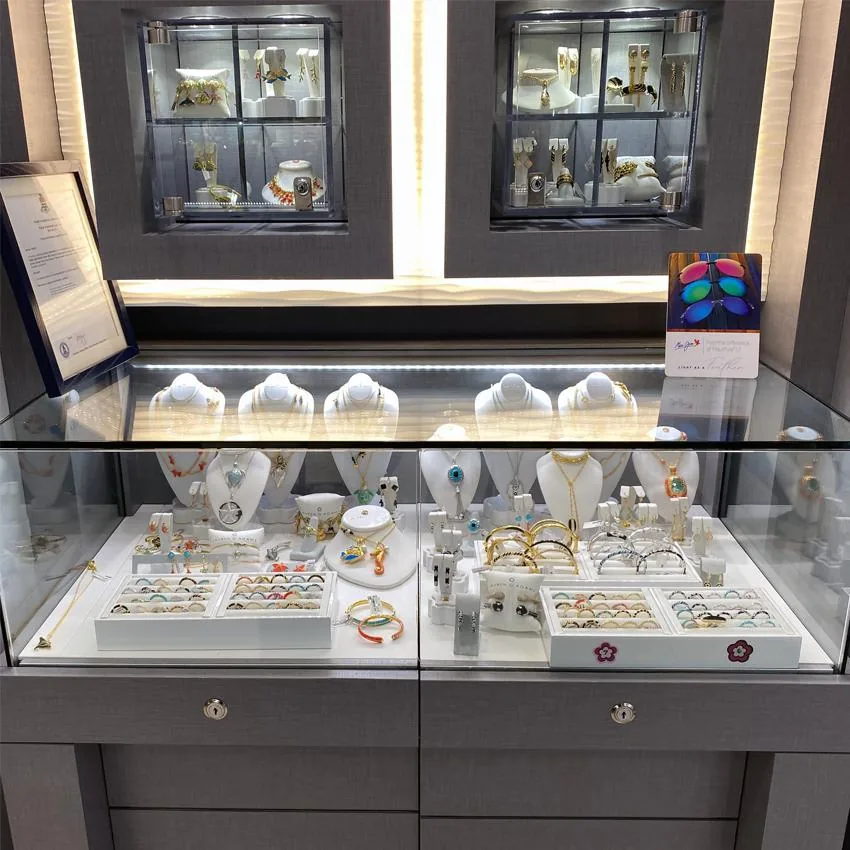
Jewelry & watch cases
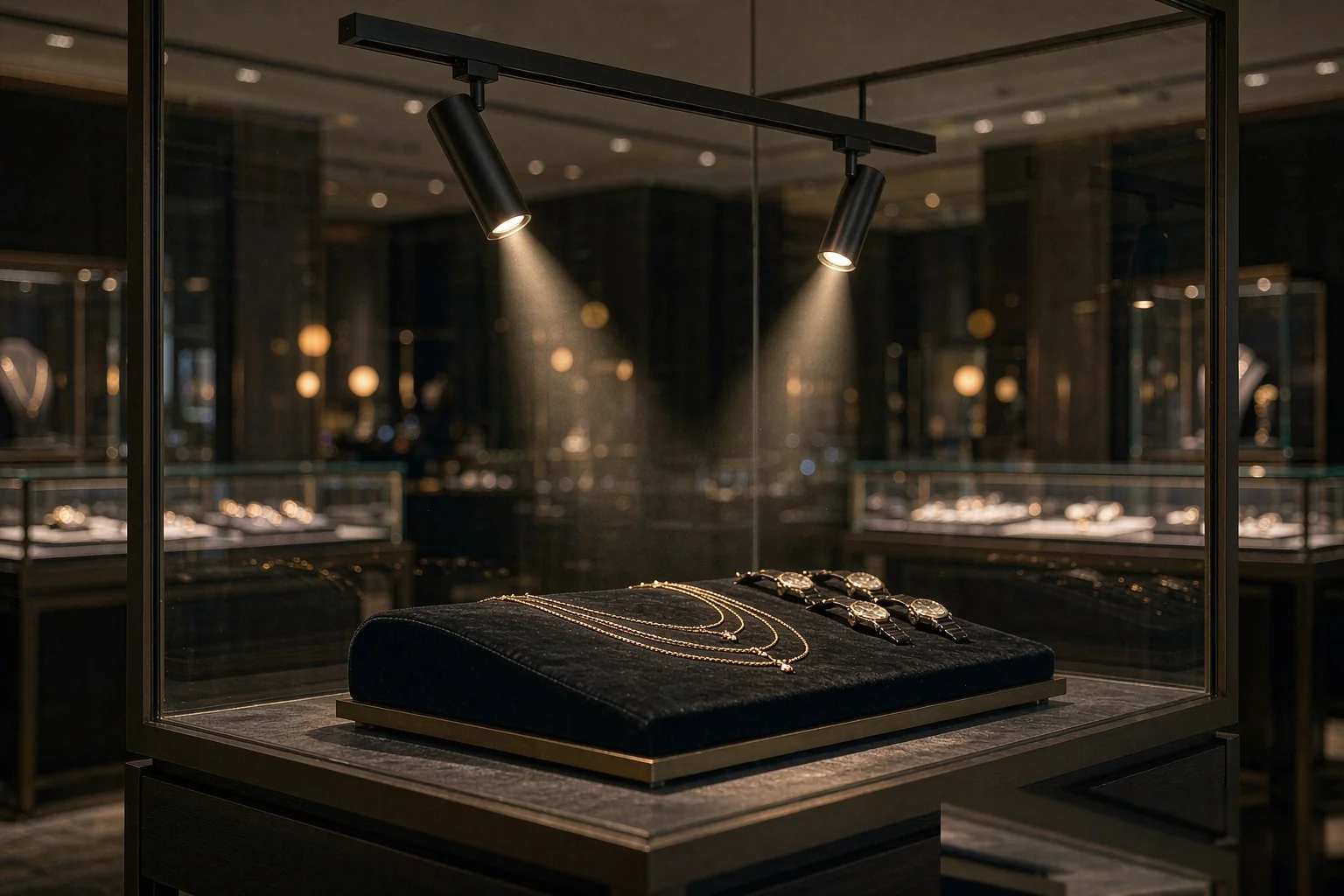
The job: polished metal mirrors the room, stones only return light when the beam lands at the right angle, and the glass throws
glare straight back at the customer. Jewelry is the hardest case in retail.
What changes in the spec:
- Target illuminance 1,000–3,000 lux in the pool, not across the shelf — diamonds need contrast, not even washing.
- CRI 90+ as standard: low CRI turns red stones brown and gold grey.
- 3000K for gold and coloured stones, 4000K for diamonds and white metals — the
3000K vs 4000K comparison shows why. - Narrow to medium optics (15°–45°), aimed from above the merchandise, never level with it.
What we typically ship: magnetic track in the case ceiling or on poles, 3 W OSRAM heads per merchandise position, external driver
sized at load ÷ 0.8, and a dimming setup if the salon changes scene after hours.
Full specification notes: jewelry & watch display lighting →
| Single-piece spotlight (ring, pendant, solitaire) | CHIB7514-P-1W | 1 W head with 15° / 25° / 45° optics; 210 lm keeps stones brilliant without heating the case |
| Tall cases and larger stones | CHIB7528-P-3W | 3 W output with zoomable optics — one head covers different cabinet heights |
| Back panel wash | CHIA8426-14W | Linear aluminum bar for even fill behind the display |
Read the watch display case lighting guide for dial colour, bracelet glare and layout patterns.
Museum & gallery exhibits
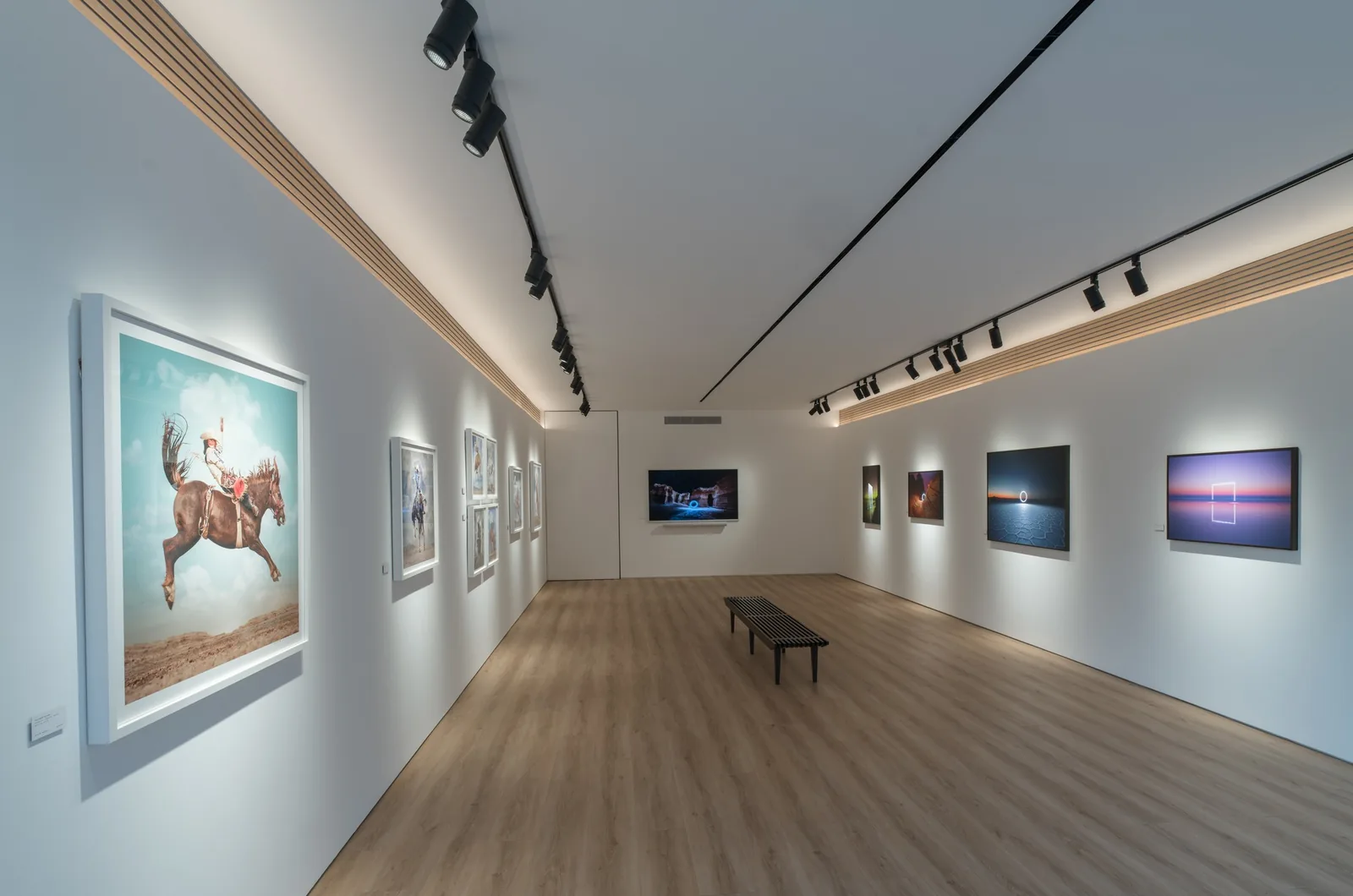
The job: the object cannot be moved, the beam has to change when the exhibition changes, and light itself is the enemy —
cumulative exposure damages textiles, works on paper and dyed leather long before anyone notices.
What changes in the spec:
- Conservation ceilings replace design targets: 50 lux for high-sensitivity material, 150–200 lux for medium, 300 lux for stone, metal
and ceramics. These are exposure budgets — see the lux and UV limits guide. - UV-filtered sources and no IR at the object; LED makes this easy, halogen made it hard.
- Zoomable optics (10°–60°) so the beam follows the exhibition change without new hardware.
- Heads repositioned without tools — magnetic mounting means a curator can re-aim a case in minutes.
What we typically ship: magnetic track with zoomable 3 W heads, deep-dimming drivers, and a layout planned from the object list
rather than the room.
Full specification notes: museum & gallery exhibit lighting →
| Sensitive exhibits at conservation levels | CHIB7515-P-1W | 1 W dimmable head on 12 V track; re-aimable in seconds without tools |
| Mixed-material vitrines and plinth cases | CHIB7523-P-3W | Zoomable 3 W head covers both with one fixture type |
| Case interior fill | CHIA8426-14W | Dimmable linear bar with no UV emission for long-duration display |
Read the conservation lighting guide for lux limits, UV safety and dimming strategy.
Collectibles & glass display cabinets
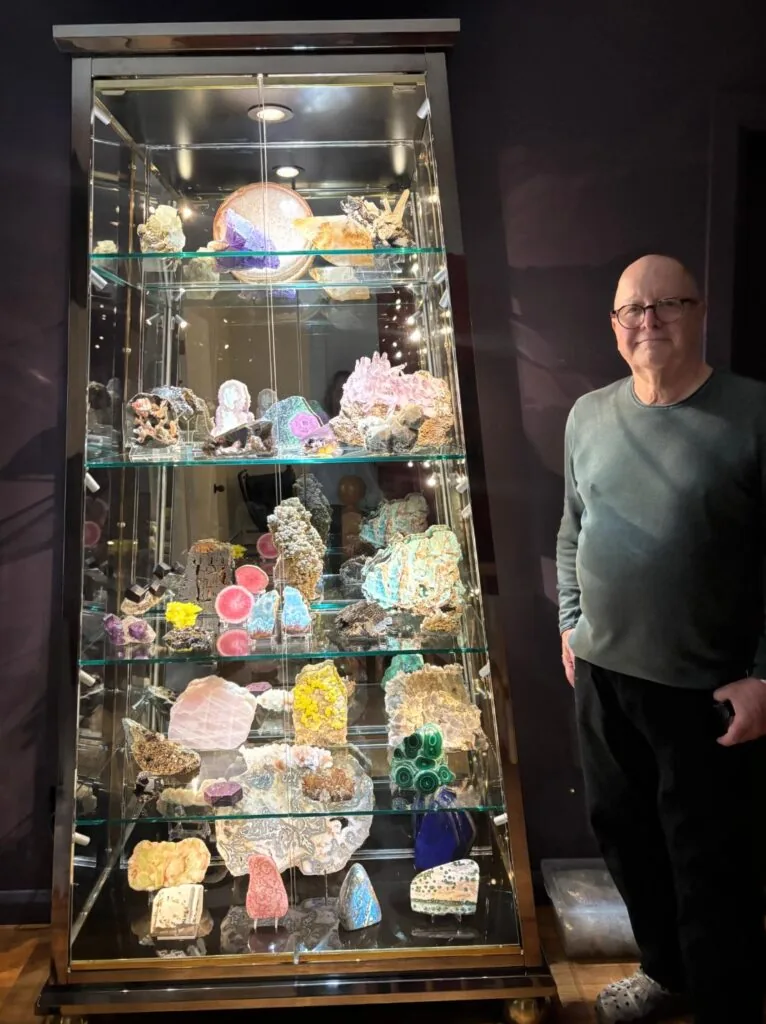
The job: a tall cabinet with several glass shelves, limited internal space, and merchandise — figures, models, crystals,
cameras, watches — that is heat-sensitive and often one of a kind.
What changes in the spec:
- Every shelf needs its own light from the shelf above — one head at the top leaves four shelves dark.
- Sealed cases trap heat: prefer more 3 W heads over fewer high-power ones, and keep the driver outside the display volume.
- 1 W and 2 W mini heads exist for cabinets where a 3 W unit physically will not fit — see the
mini magnetic track guide. - Painted surfaces dislike heat and UV alike; CRI 90+ keeps the paint reading true.
What we typically ship: mini track with 1–3 W heads, one per shelf level, plus a
retrofit path for cabinets whose built-in lighting has already failed.
For the full collectibles treatment – fade risk, CRI, per-shelf beam choices and real configurations – see the collectibles display case lighting guide.
| Figure spotlighting without drilling | CHIB7520-3P-1W | Pole spotlight rises from the case floor; the glass stays untouched |
| Taller figures and busts | CHIA7316-3W | 3 W pole head with adjustable beam for scale models and statues |
Retail shelving & shopfitting
The job: gondolas, wall bays and under-shelf runs where even vertical illumination on the facings is what sells —
the customer reads a wall of products, not a single hero object.
What changes in the spec:
- Uniformity beats drama: wider optics (45°–60°) and tighter spacing, or linear bars for continuous runs.
- Under-shelf lighting hides its own hardware — the hidden
bar guide explains why concealed runs read as premium. - 4000K generally reads truer for packaged goods; 3000K for wood, leather and warm finishes.
- The load maths is identical: total wattage ÷ 0.8 sets the driver — the
driver guide covers it.
Full specification notes: retail shelf & shopfitting lighting →
| Continuous shelf wash | CHIA8428-4 | Length-customizable LED bar up to 2000 mm for even coverage per row |
| Recessed infrastructure | T04F | Slim recessed power track that disappears into the shelf architecture |
| Driver sizing | CHS 12V/24V drivers | Add head wattage × 1.25 and keep one feed to roughly 20 heads |
Seasonal windows & holiday retail
The job: a window or pop-up that goes up in November and comes down in January — shopped by
passers-by in daylight and in the dark, installed overnight while the store keeps trading, and rebuilt on a new theme
next season.
What changes in the spec:
- Speed beats elegance: magnetic track plus plug-in heads installs and re-aims without drilling or an electrician per
position, which is what makes an overnight build realistic. - Sun-facing windows need 4000K, not 3000K — daylight at 5000–6500K simply out-runs a warm wash for the
two or three hours the sun crosses the glass. North-facing or covered windows can run warm. - Buy matched 3000K and 4000K pairs rather than tunable heads: the swap is a head change in minutes, and the stock is
reusable for the spring reset. - Keep the run light: a 1W head at close range reads as a bright accent in a window, while 3W aimed from the ceiling
burns out the near merchandise and leaves the back of the window flat. - Document the layout photographically before strip-out. Next season is a re-hang, not a re-purchase.
Scene reasoning and the daylight-versus-temperature trade-off: 3000K
vs 4000K for display cases → · sizing a window run: showcase
lighting calculator
| Aimable accent | CHIB7528-P-3W | Magnetic track head with adjustable aim for hero pieces and mannequin focus |
| Close-range point light | CHIB7514-P-1W | 1W mini head for jewellery pads and small props inside the window |
| Continuous wash | CHIA8428-4 | Length-customizable bar for backdrop or shelf runs behind the display |
| Track without routing | T04F | Recessed power track for a permanent channel that survives every seasonal rebuild |
Eyewear & optical display
The job: frames behind glass, where the real enemy is a specular reflection sitting exactly across the lenses the customer is
trying to look through. Dedicated scene photography is on its way; the specification is already settled:
- 800–1,500 lux on the frames, 4000K, and heads mounted above the frame line aimed down — never level with the lenses.
- Narrow optics with a slight forward tilt keep the beam off the glass shelf and out of the viewer’s sightline.
- Mirror-backed cabinets need the head recessed deeper; the
glare and reflection guide covers the geometry.
Full specification notes: eyewear & optical display lighting →
| Per-row frame wash | CHIA8428-4 | One bar per shelf row; 4000 K matches the try-in mirror lighting |
| Feature frame accent | CHIB7514-P-1W | Narrow beam picks out hero frames on the feature shelf |
Read the eyewear display case lighting guide for CRI 90 on acetate colors and per-row layouts.
From scene to specification
Three tools take you from what you see here to what you actually order:
- The showcase lighting calculator — fixture count, beam angle, load and driver minimum
from five inputs. - The configuration checklist — everything a complete order
contains: track, heads, driver, cords, connectors, end caps and the spares package. - The configuration request — send case dimensions and a photo; we return a complete bill of materials,
normally within one working day. Every system ships with a 3-year warranty, OSRAM chips and CRI 90+ as standard.
Related guides
- Showcase and display case lighting: the complete guide
- Showcase lighting calculator
- Eight display case lighting problems and how we solve them
- Configuration checklist
- Watch display case lighting guide
- Eyewear display case lighting guide
- Shop window display lighting guide
- Model code builder — assemble an order line from the live catalogue
- Six ready-made lighting configurations