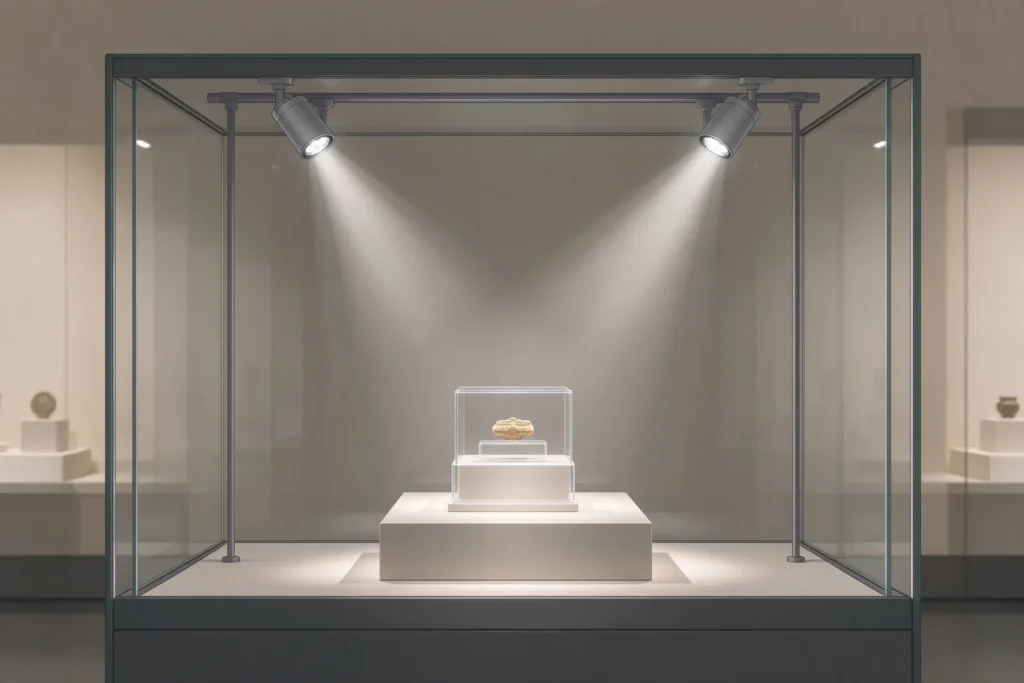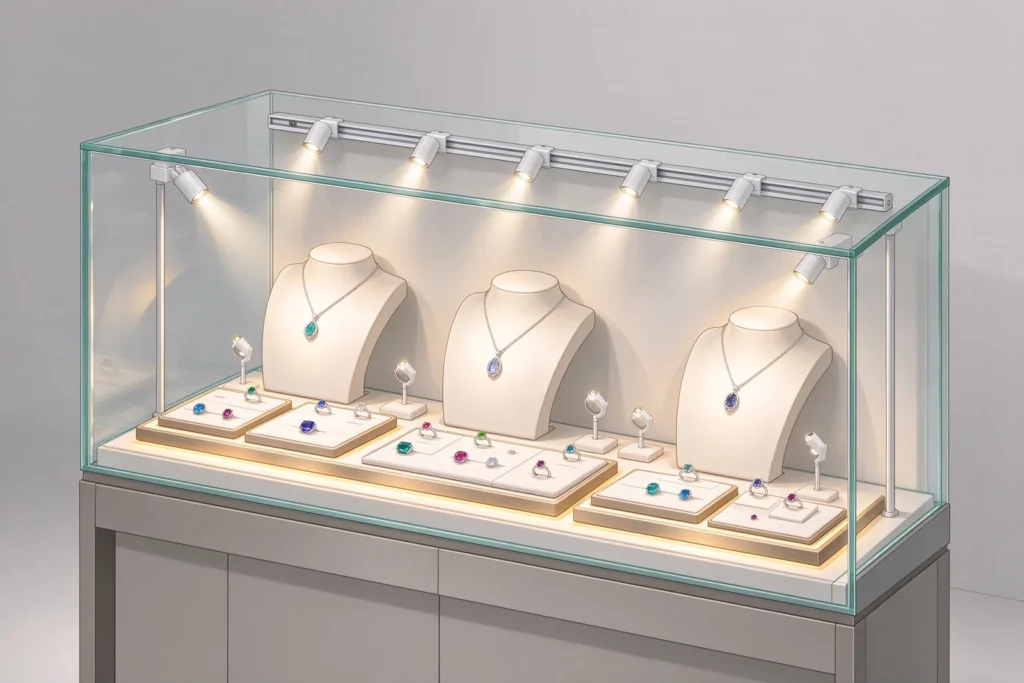
In a museum showcase, light does two jobs at once: it presents the object, and it slowly damages it. Unlike almost every other risk in a gallery, light damage is cumulative and irreversible – a faded textile never recovers, and the fading continues every hour the case is lit. Conservation lighting is therefore not about avoiding light; it is about budgeting the dose.
Last updated: November 2026
This guide sets out the numbers collection-care professionals work with, and what they mean for showcase lighting decisions – for museums, galleries, private collections and luxury retail displaying heritage or sensitive pieces.
The two damage mechanisms
- Photochemical damage. Driven by ultraviolet and the short-wavelength (blue) end of visible light. It bleaches dyes, yellows paper and embrittles organic materials. The effect is cumulative over total exposure – it never resets.
- Photothermal damage. Radiant heat and the heat of the luminaire itself dry and stress materials, and daily thermal cycling cracks paint layers and joints. This one is manageable by source choice and luminaire placement.
Sensitivity classes and the numbers behind them
Published collection-care standards – such as PAS 198:2012 and CIE 157:2004 – group materials by light responsivity and give working limits. The widely used framework:
| Sensitivity class | Typical materials | Max illuminance | Annual exposure budget |
|---|---|---|---|
| Highly sensitive | Textiles, costumes, watercolors, prints, drawings, manuscripts, feathers, most dyed leathers | 50 lux | ~150,000 lux-hours/year |
| Sensitive | Oil and tempera paintings, undyed leather, horn, bone, ivory, some woods | 200 lux | ~600,000 lux-hours/year |
| Insensitive | Metal, stone, glass, ceramic, most minerals | No strict ceiling – visibility and display design govern | – |
Two readings of this table matter for showcase buyers. First, 50 lux is a very low light level – roughly candle-dinner atmosphere – which is why highly sensitive pieces are shown in dim, focused pools. Second, the annual budget means you can trade hours against intensity: 50 lux for 3,000 hours per year, or dimmer for longer, both stay inside the dose.
UV and IR: measure, do not assume
- Ultraviolet is measured in microwatts per lumen (uW/lm). Traditional guidance keeps UV below 75 uW/lm. LED sources emit negligible UV – one of the main reasons museums left halogen behind. “Negligible” is still worth confirming on the datasheet for the specific luminaire.
- Infrared / radiant heat is the remaining thermal channel. LEDs convert more power to light and less to radiant heat than halogen, but the luminaire body still gets warm – inside a sealed showcase, put the heat load outside the sealed volume or give it a path out. Our article on how LED protects collections from heat damage covers the mechanics.

Practical showcase strategies that hold the limits
- Dim to the limit, not to taste. Fix the dimmer setting so the object surface reads at or below the class ceiling – our dimming guide covers the control methods that reach low levels stably.
- Count hours automatically. Occupancy sensors and timers cut the lit hours of cases that face low traffic. Every unlit hour is budget preserved.
- Rotate the most sensitive pieces. The annual budget makes rotation a legitimate display strategy – lit season, dark season.
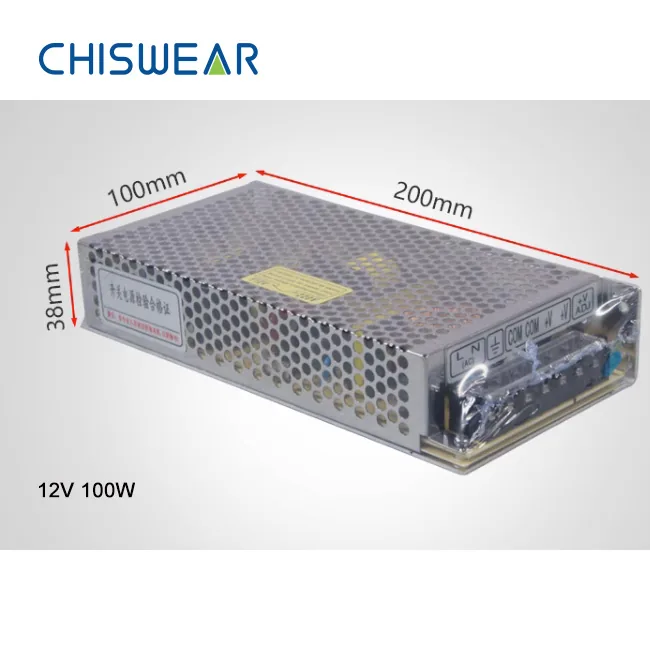
- Keep the heat out of the case. Remote drivers, ventilated base cabinets, and luminaires with the heat path pointing away from the object.
- For the most sensitive objects, remote-source lighting – light piped into the case from a projector or fiber system – removes the electrical and thermal source from the case entirely. It is a specialized approach, but it is the answer for the most fragile categories.
Measuring: two instruments, three readings
- A lux meter at the object surface (not at the glass, not at the lamp) – the reading that defines the class ceiling check.
- A UV meter for uW/lm, mainly when non-LED sources share the case or daylight leaks in.
- A spot check after any change – re-aimed heads, new merchandise, repositioned spot: the reading moves, the budget moves.
For a full survey – daylight contribution, fabric reflectance, case-by-case dose plans – commission a lighting designer or accredited conservator. For a single showcase or a small gallery, the table above and a lux meter get you most of the way.
Frequently asked questions
Are LED lights safe for museum objects?
Safer than most alternatives, not automatically safe. LED sources emit negligible ultraviolet and far less radiant heat than halogen, which is why museums moved to them. But visible light itself causes cumulative, irreversible photochemical damage to sensitive materials – so illuminance limits and annual exposure budgets still apply even under LED.
How do I track lux-hours for an exhibit?
Multiply the illuminance at the object surface by the hours it is lit, and keep a running annual total against the exposure budget for its sensitivity class. Occupancy sensors, timers and closing hours all reduce the hours side of the equation. Record light meter readings per display when the installation changes.
Fifty lux seems too dark to see the object properly.
Fifty lux is the recognized ceiling for highly sensitive materials precisely because visibility and preservation trade off. Presentation technique recovers the perceived brightness: keep the case interior and fabric dark, light the object itself, and let the viewer’s eye adapt. If an object cannot be seen well at its limit, the professional answers are rotation, longer viewing distance design or reproduction – not more light.
Planning a showcase with conservation limits?
Send us the object types and case dimensions and we will propose a layout that respects the illuminance ceilings: low-output heads, dimming to the limit, drivers outside the case. More application guides are collected in our display case lighting guide, including preservation vs presentation best practices.