Last updated: November 2026
One lighting system, four very different jobs. The same magnetic track that holds a 3 W head above a diamond case also lights a gallery wall,
a collector’s glass cabinet and a gondola of framed products — but the specification changes completely each time: the target illuminance, the beam
angle, the colour temperature and even the mounting position all move.
This page shows typical installation scenes for each application, with the specification notes that go with them. These are illustrative
scenes, not customer project records — we publish what we actually make and how it is typically installed, and we keep client installations
private. For real numbers, run your case through the showcase lighting calculator.
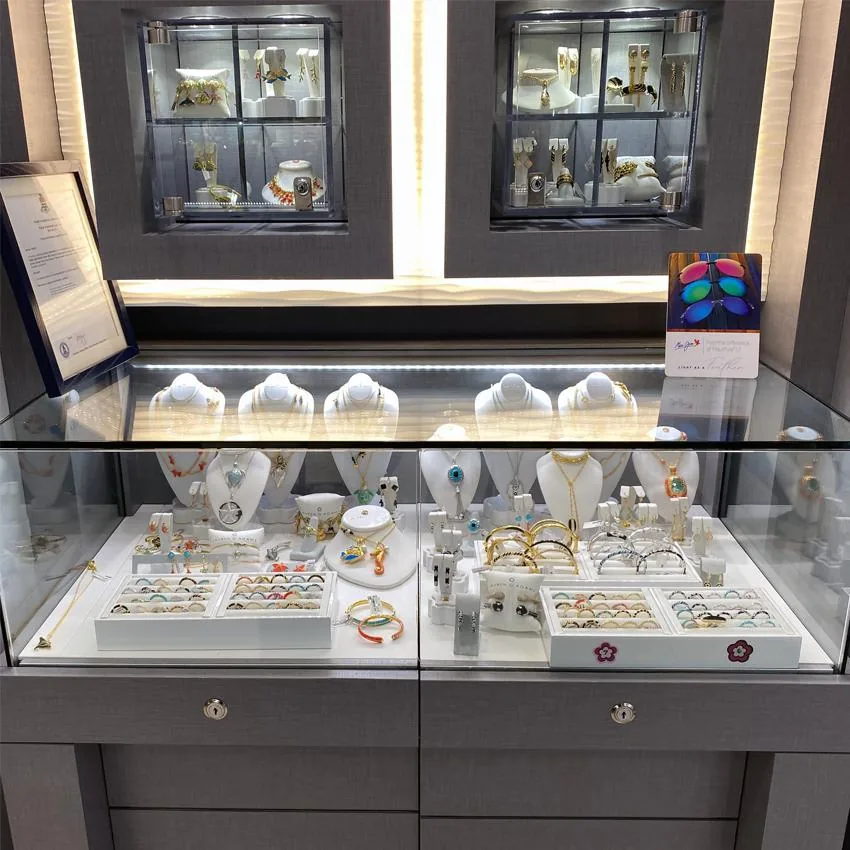
Jewelry & watch cases
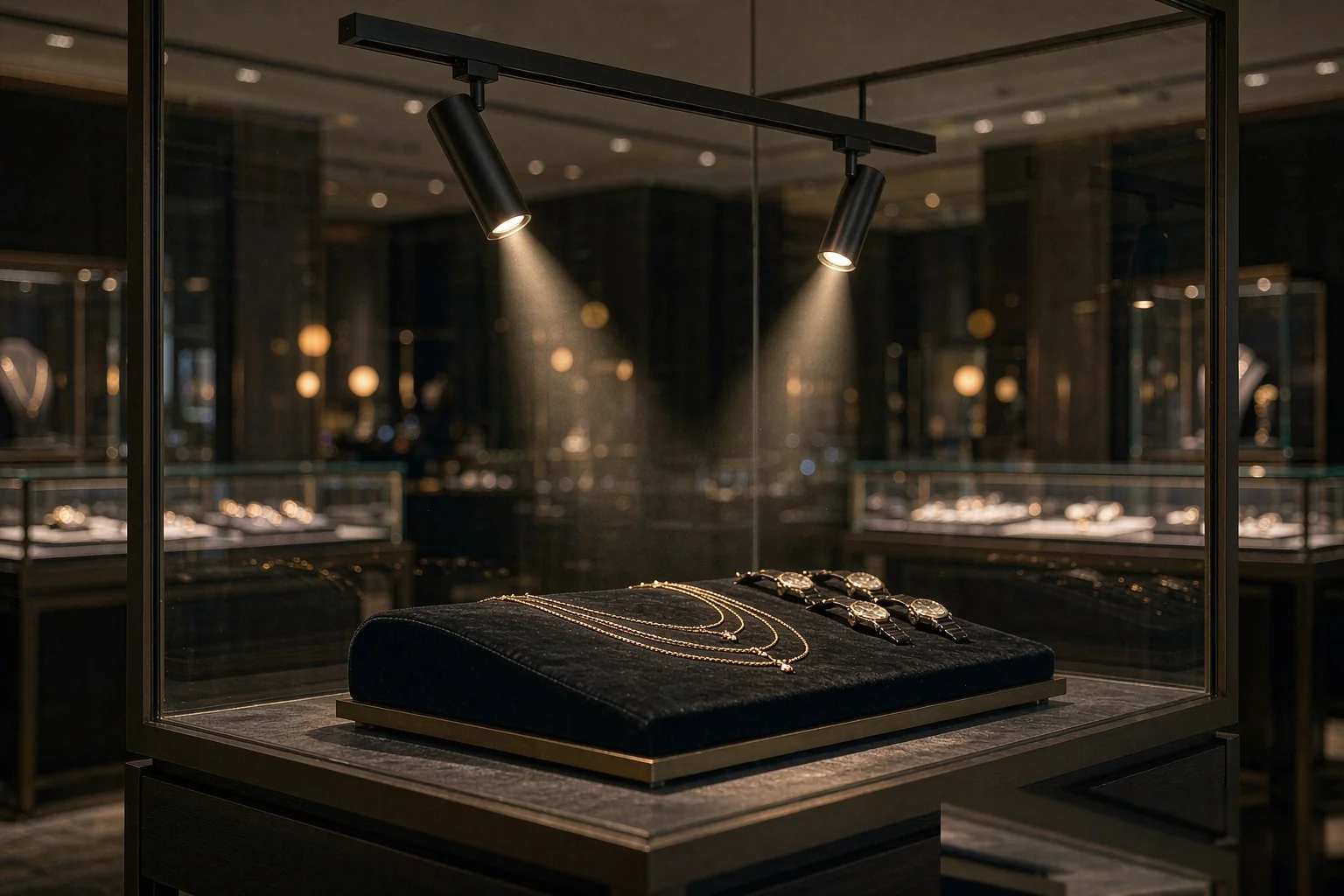
The job: polished metal mirrors the room, stones only return light when the beam lands at the right angle, and the glass throws
glare straight back at the customer. Jewelry is the hardest case in retail.
What changes in the spec:
- Target illuminance 1,000–3,000 lux in the pool, not across the shelf — diamonds need contrast, not even washing.
- CRI 90+ as standard: low CRI turns red stones brown and gold grey.
- 3000K for gold and coloured stones, 4000K for diamonds and white metals — the
3000K vs 4000K comparison shows why. - Narrow to medium optics (15°–45°), aimed from above the merchandise, never level with it.
What we typically ship: magnetic track in the case ceiling or on poles, 3 W OSRAM heads per merchandise position, external driver
sized at load ÷ 0.8, and a dimming setup if the salon changes scene after hours.
Full specification notes: jewelry & watch display lighting →
Museum & gallery exhibits
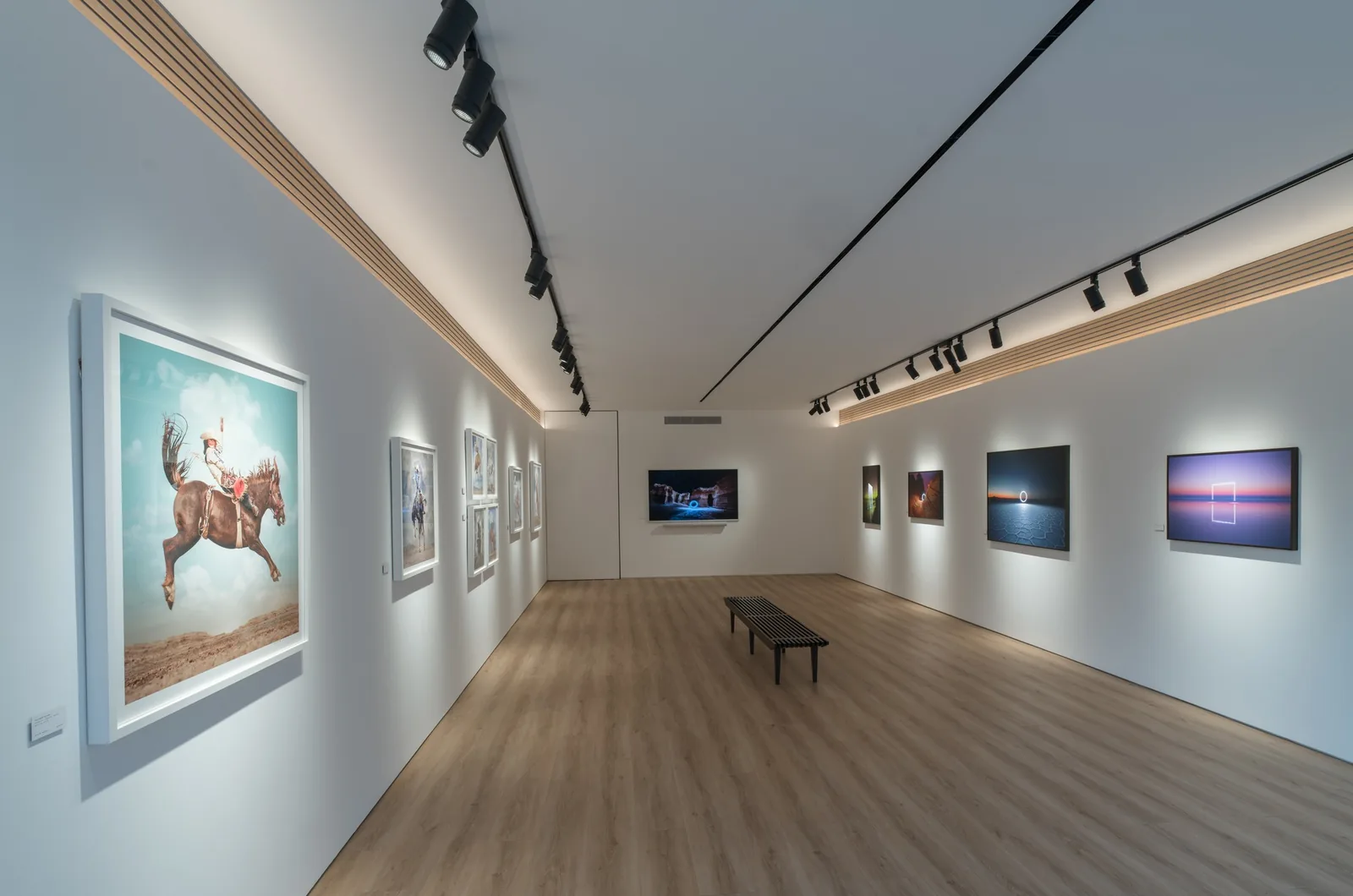
The job: the object cannot be moved, the beam has to change when the exhibition changes, and light itself is the enemy —
cumulative exposure damages textiles, works on paper and dyed leather long before anyone notices.
What changes in the spec:
- Conservation ceilings replace design targets: 50 lux for high-sensitivity material, 150–200 lux for medium, 300 lux for stone, metal
and ceramics. These are exposure budgets — see the lux and UV limits guide. - UV-filtered sources and no IR at the object; LED makes this easy, halogen made it hard.
- Zoomable optics (10°–60°) so the beam follows the exhibition change without new hardware.
- Heads repositioned without tools — magnetic mounting means a curator can re-aim a case in minutes.
What we typically ship: magnetic track with zoomable 3 W heads, deep-dimming drivers, and a layout planned from the object list
rather than the room.
Full specification notes: museum & gallery exhibit lighting →
Collectibles & glass display cabinets
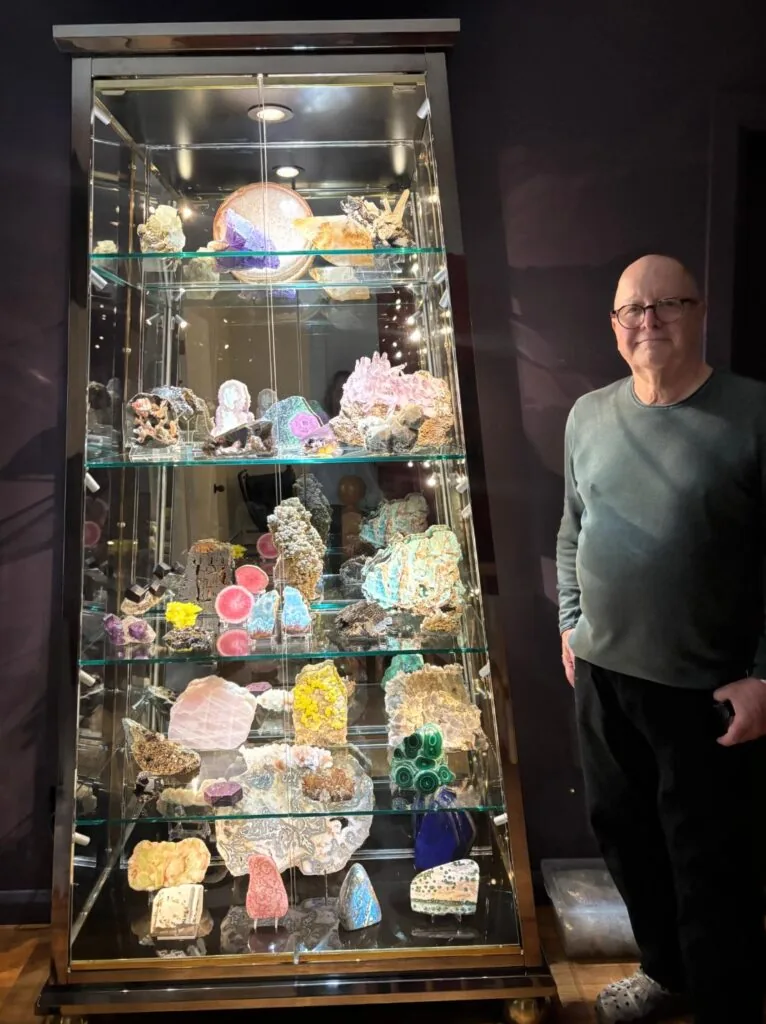
The job: a tall cabinet with several glass shelves, limited internal space, and merchandise — figures, models, crystals,
cameras, watches — that is heat-sensitive and often one of a kind.
What changes in the spec:
- Every shelf needs its own light from the shelf above — one head at the top leaves four shelves dark.
- Sealed cases trap heat: prefer more 3 W heads over fewer high-power ones, and keep the driver outside the display volume.
- 1 W and 2 W mini heads exist for cabinets where a 3 W unit physically will not fit — see the
mini magnetic track guide. - Painted surfaces dislike heat and UV alike; CRI 90+ keeps the paint reading true.
What we typically ship: mini track with 1–3 W heads, one per shelf level, plus a
retrofit path for cabinets whose built-in lighting has already failed.
For the full collectibles treatment – fade risk, CRI, per-shelf beam choices and real configurations – see the collectibles display case lighting guide.
Retail shelving & shopfitting
The job: gondolas, wall bays and under-shelf runs where even vertical illumination on the facings is what sells —
the customer reads a wall of products, not a single hero object.
What changes in the spec:
- Uniformity beats drama: wider optics (45°–60°) and tighter spacing, or linear bars for continuous runs.
- Under-shelf lighting hides its own hardware — the hidden
bar guide explains why concealed runs read as premium. - 4000K generally reads truer for packaged goods; 3000K for wood, leather and warm finishes.
- The load maths is identical: total wattage ÷ 0.8 sets the driver — the
driver guide covers it.
Full specification notes: retail shelf & shopfitting lighting →
Eyewear & optical display
The job: frames behind glass, where the real enemy is a specular reflection sitting exactly across the lenses the customer is
trying to look through. Dedicated scene photography is on its way; the specification is already settled:
- 800–1,500 lux on the frames, 4000K, and heads mounted above the frame line aimed down — never level with the lenses.
- Narrow optics with a slight forward tilt keep the beam off the glass shelf and out of the viewer’s sightline.
- Mirror-backed cabinets need the head recessed deeper; the
glare and reflection guide covers the geometry.
Full specification notes: eyewear & optical display lighting →
From scene to specification
Three tools take you from what you see here to what you actually order:
- The showcase lighting calculator — fixture count, beam angle, load and driver minimum
from five inputs. - The configuration checklist — everything a complete order
contains: track, heads, driver, cords, connectors, end caps and the spares package. - The configuration request — send case dimensions and a photo; we return a complete bill of materials,
normally within one working day. Every system ships with a 3-year warranty, OSRAM chips and CRI 90+ as standard.