Last updated: November 2026
A dead light inside a display case is not a lighting problem. It is a sales problem: the merchandise in that cabinet disappears. We went through the public reviews and Amazon’s own topic-level sentiment aggregation for display case lighting – integrated cabinets, showcase spotlights, puck lights and retail counter kits – and the same eight failures appear again and again, across brands and price points.
Each of these problems maps to a specific design decision. This article lists what reviewers actually report, and how the modular magnetic track system we build addresses every one of them.
Problem 1: The lights fail – and you cannot replace them
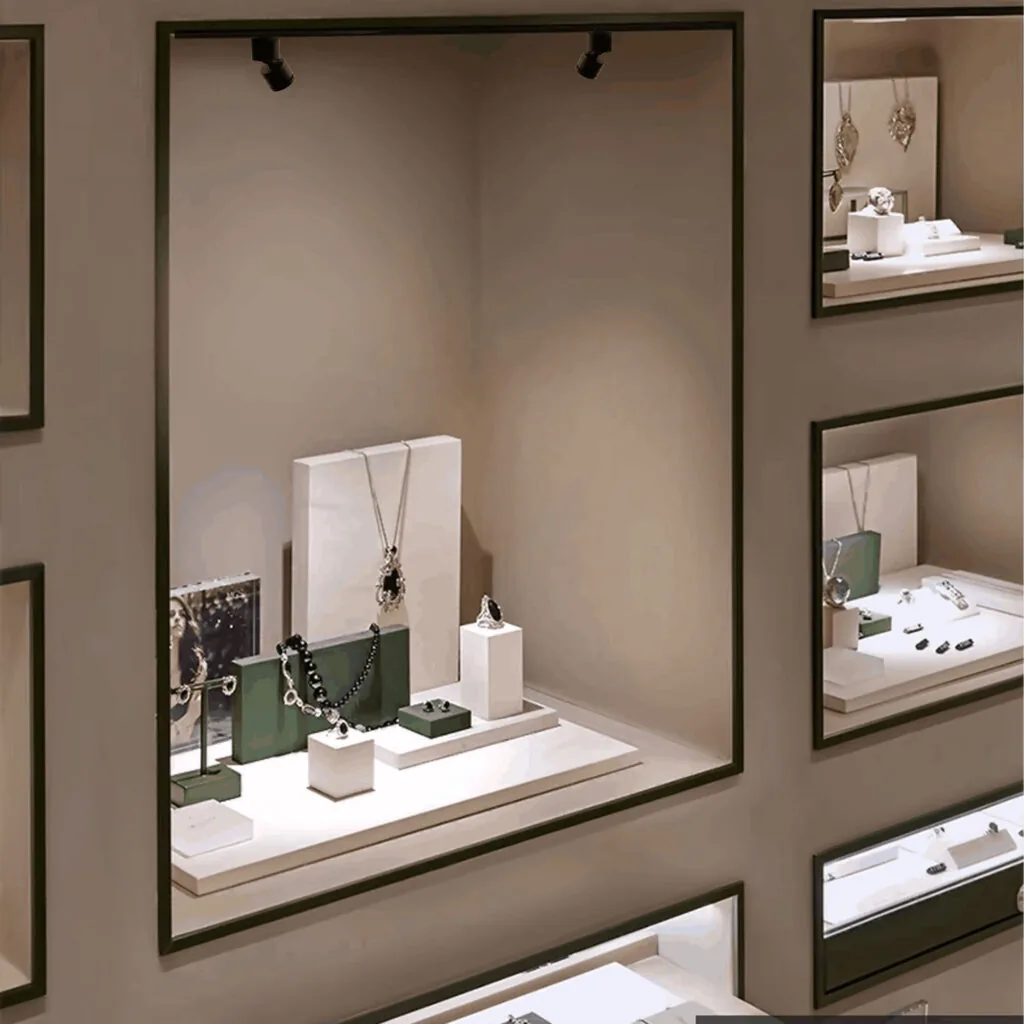
Integrated “cabinet with LED lights” products are the worst performers in the category. On one widely sold 69-inch glass display cabinet, the lighting topic draws 18 review mentions, split evenly between positive and negative – and the negative side is extreme: “not working out of the box”, “the lights are not working at all now, less than two months”. When the light is built into the furniture, a failed LED means a warranty claim on the entire cabinet, or a cabinet you live with dark.
How we solve it: every component is a module. The track is an aluminum rail mounted inside the cabinet; the heads attach magnetically and lift off in seconds; the driver is external and serviceable. A failed head is a five-minute swap that a store associate can do – not a furniture return. If your cabinet’s built-in lighting has already died, our guide to adding lights to an existing display case covers the retrofit path.
Problem 2: Early failure – lights that die long before their rated life
Across the category, lifespan and durability topics show almost entirely negative sentiment – reviewers describe lights that “worked great for a month, then simply stopped”, with the return window already closed. The pattern is consistent: the LED chip is rarely the failure. Under-specified drivers, poor connectors and inadequate heat management are.
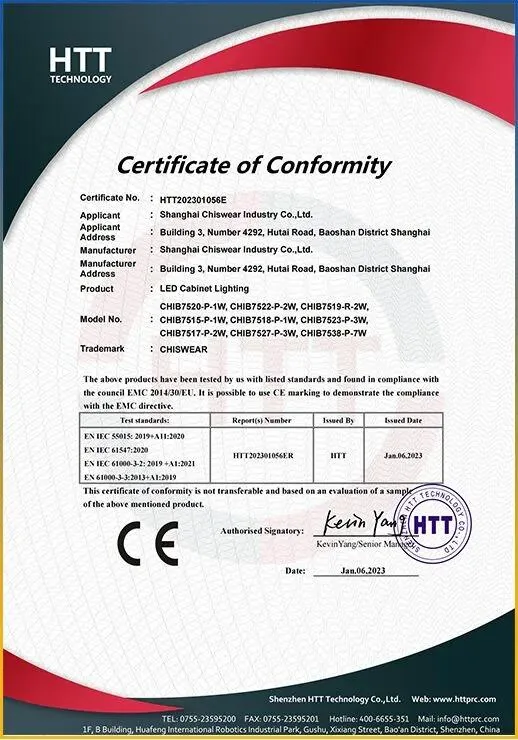
How we solve it: we build on OSRAM LED chips with CRI90+ color rendering, pair every system with a driver rated well above the connected load, and back the complete system – heads and driver – with a 3-year warranty. For projects we also recommend a spares package: 2-5% extra heads and one spare driver per site, so a failure never means a dark case while a replacement ships.
Problem 3: Flickering and intermittent dimming
Flicker is one of the most damaging complaints in showcase lighting – in a jewelry case it draws the eye away from the merchandise. Reviewers trace it to loose multiport connectors (“the connections are not tight, so most of the time the lights are either flashing or very dim”) and to dimmer-driver mismatches that only appear at certain brightness levels.
How we solve it: flicker has six identifiable causes, and we published a six-step diagnostic covering all of them. At the specification stage, two rules prevent most of it: keep the total connected load at or below 80% of the driver’s rating, and test the dimmer with one sample driver on site before ordering the full project. Our heads and drivers ship as matched, tested pairs.
Problem 4: Adhesive lights that fall off the shelf
Adhesive mounting is the single most-complained-about installation method in the category. In Amazon’s aggregated review data, “adhesiveness” draws more than 900 mentions with 53% negative – “didn’t last a day”, “the 3M adhesive doesn’t hold and they keep falling”. The failures concentrate exactly where display cases need light: lights mounted upside down under a shelf, inside warm enclosed cabinets, where the adhesive softens and lets go. Some reviewers end up gluing puck lights in place with silicone.
How we solve it: magnetic mounting. The heads attach to an aluminum rail screwed once to the cabinet ceiling or valance – no adhesive, no drilling into shelves, no consumable tape. Once the rail is in, heads can be repositioned, added or replaced indefinitely without touching the mounting.
Problem 5: The power supply is the hidden point of failure
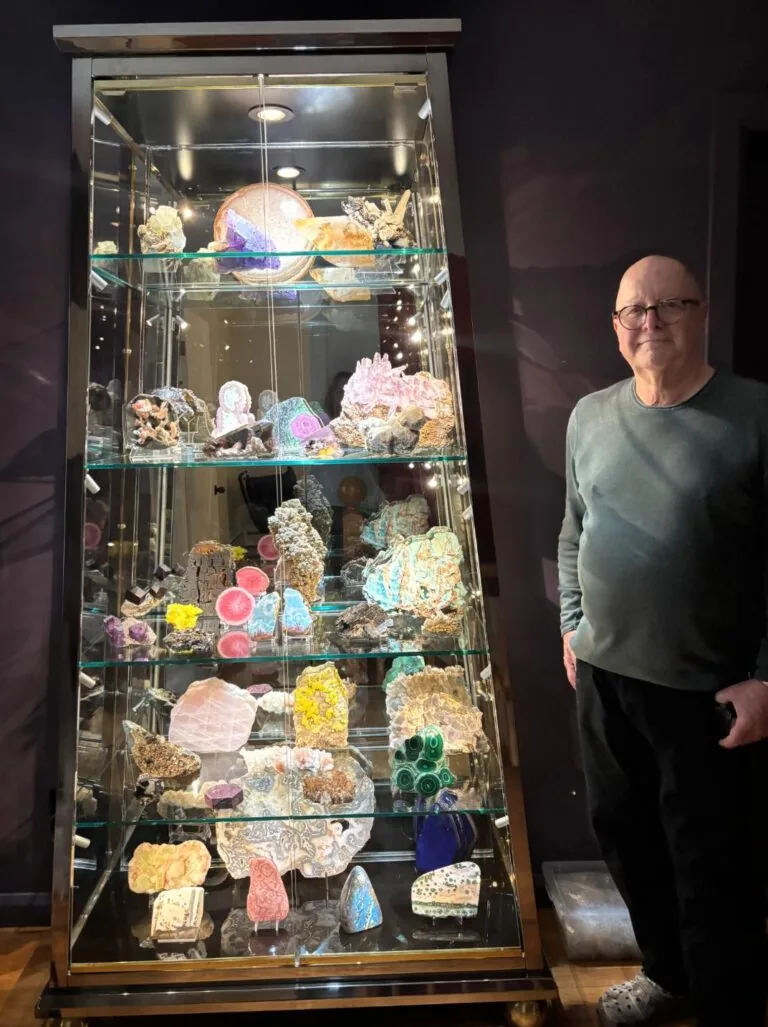
Reviewers report dual-path (USB/battery) display lights that die the first time they are plugged into USB, drivers that fail when the connected load creeps above what they were sized for, and kits that arrive without the converter the photos showed. In a showcase, the power supply is the least visible component and the most common single point of failure.
How we solve it: driver sizing follows a published formula – total head wattage multiplied by 1.2, keeping continuous load at or below 80% of the rating – with the full method in our driver selection guide. And every order ships as a complete bill of materials: track, heads, driver, cords, connectors and end caps in one shipment, so nothing is discovered missing at installation. The configuration checklist shows exactly what a complete order contains.
Problem 6: “Smart” controls that make things worse
A newer complaint pattern: cabinets with motion sensors that cannot actually be turned off (“it still powers off at random intervals – I want it ON when I want it ON”), and app-controlled lighting where basic settings like brightness require pairing a phone. Reviewers did not buy a display case to debug firmware.
How we solve it: control is stated in writing before you order. A simple switch, or dimming via the method your project actually uses – leading-edge/trailing-edge phase cut, 0-10V, PWM or DALI – with the compatibility requirements in our dimming guide. What you specify is what ships; nothing on the circuit depends on an app.
Problem 7: Short cords, missing switches, angles that barely move
One one-star review of a mini showcase spotlight hits three problems in a paragraph: the wire is thicker than the base so the light will not sit flat, there is no power switch (unplugging is the only way to turn it off), and the “adjustable” head “barely moves maybe 20 percent”. None of these show up in a product photo; all of them show up on installation day.
How we solve it: cord lengths and switch/dimming options are part of the bill of materials, agreed before the order – not surprises in the box. And every head’s adjustment range is published: tilt and rotation figures on the datasheet, with zoomable models stating their full beam range, so you know exactly how far each head aims before it ships.
Problem 8: You cannot buy matching lights next year
The quietest but most expensive complaint: “the lights I bought aren’t even on the Amazon page anymore, which makes adding lights problematic.” Proprietary systems lock you to a seller’s catalog; when the listing disappears, the track installed in your cases becomes an orphan.
How we solve it: as the factory, we can make a promise a marketplace seller cannot. If a listed model is ever discontinued, we notify you at least two weeks in advance and recommend a drop-in replacement that fits the same track – and you can reorder by original model number for extension and relamping. One track, bought once, stays serviceable for the life of the case.
The eight problems, side by side
| Problem | What Amazon reviewers report | How our system addresses it |
|---|---|---|
| Unreplaceable integrated lights | Dead lighting = warranty claim on the whole cabinet | Modular magnetic heads + external driver, individually replaceable |
| Early failure | 100%-negative lifespan topics; “stopped working after a month” | OSRAM chips, CRI90+, 3-year warranty on heads and driver, spares package |
| Flicker | “Flashing or very dim” from loose connectors | Matched luminaire-driver pairs, 80% load rule, six-cause diagnostic |
| Adhesive failure | 900+ mentions, 53% negative; lights fall off shelves | Aluminum rail mounting – no adhesive, no consumable tape |
| Power supply failures | USB paths that kill the unit, overloaded drivers, missing parts | Published sizing formula (W × 1.2), complete BOM in one shipment |
| Unreliable “smart” controls | Sensors that cannot be switched off, app-dependent settings | Control method specified in writing: switch, TRIAC, 0-10V, PWM or DALI |
| Short cords, no switch, fake adjustability | “Angle barely moves maybe 20 percent” | Cord length and switch in the BOM; published tilt/rotation/zoom ranges |
| Cannot extend later | “Not even on the page anymore” | Reorder by model number; 2-week discontinuation notice with drop-in replacement |
Get a complete configuration, not a box of parts
Most of the failures above come from one root cause: buying lighting as loose parts instead of as a system. Tell us your case dimensions, shelf layout and merchandise – jewelry, watches, collectibles or museum objects – and your control preference, and we will reply with a complete configuration list: track lengths, heads, a correctly sized driver, cords, and the recommended spares package. That list is free, and it is the difference between a case that stays lit for years and one that joins the review statistics above.

Frequently asked questions
Why do display case lights stop working so quickly?
In the Amazon review data, lifespan-related topics show nearly 100% negative sentiment. The failures are rarely the LED itself: they trace back to under-specified drivers, overloaded power supplies and poor connectors. Keeping the total load at or below 80% of the driver’s rating, using matched luminaire-driver pairs, and choosing fixtures with a stated warranty (ours is 3 years, covering heads and drivers) addresses the actual causes.
Can I replace the built-in lights in a display cabinet that has already failed?
Usually not – integrated cabinet lighting is glued or wired in as a non-serviceable part, which is why reviewers report throwing away or returning entire cabinets when the lights die. The practical fix is a retrofit: a low-voltage magnetic track mounted inside the cabinet ceiling runs on a separate driver, so every head and the driver remain individually replaceable. See our guide to adding lights to an existing display case.
How is a magnetic track system better than adhesive puck lights?
Adhesive mounting is the most-complained-about installation method in the category – in Amazon’s aggregated data, adhesiveness draws 53% negative feedback across 900+ mentions, and lights fall most often when mounted upside down under a shelf, exactly where display cases need them. Magnetic track heads attach to an aluminum rail with no adhesive and no drilling, and hold their position for relamping.
What warranty and continuity do you offer?
Every luminaire and driver carries a 3-year warranty. If a listed model is ever discontinued, we notify you at least two weeks in advance and recommend a drop-in replacement that fits the same track, so you can still extend or relamp an existing installation.
What information do you need to specify a complete system?
Case internal dimensions, shelf layout, the merchandise being displayed (jewelry, watches, collectibles, museum objects), and your control preference (simple switch or dimming). We reply with a complete configuration list: track lengths, heads, driver, cords, and a recommended spares package – typically 2-5% extra heads plus one spare driver per site.
Need this specified for a real cabinet? Tell us the case dimensions, what you display and your target market — we come back with beam angles, wattage and a fixture list.
WhatsApp this questionEmail insteadSize it with the calculator
MOQ 1 pc · samples in about 3 days · 3-year warranty on fixtures and drivers · reply within one business day (Mon–Sat, GMT+8)