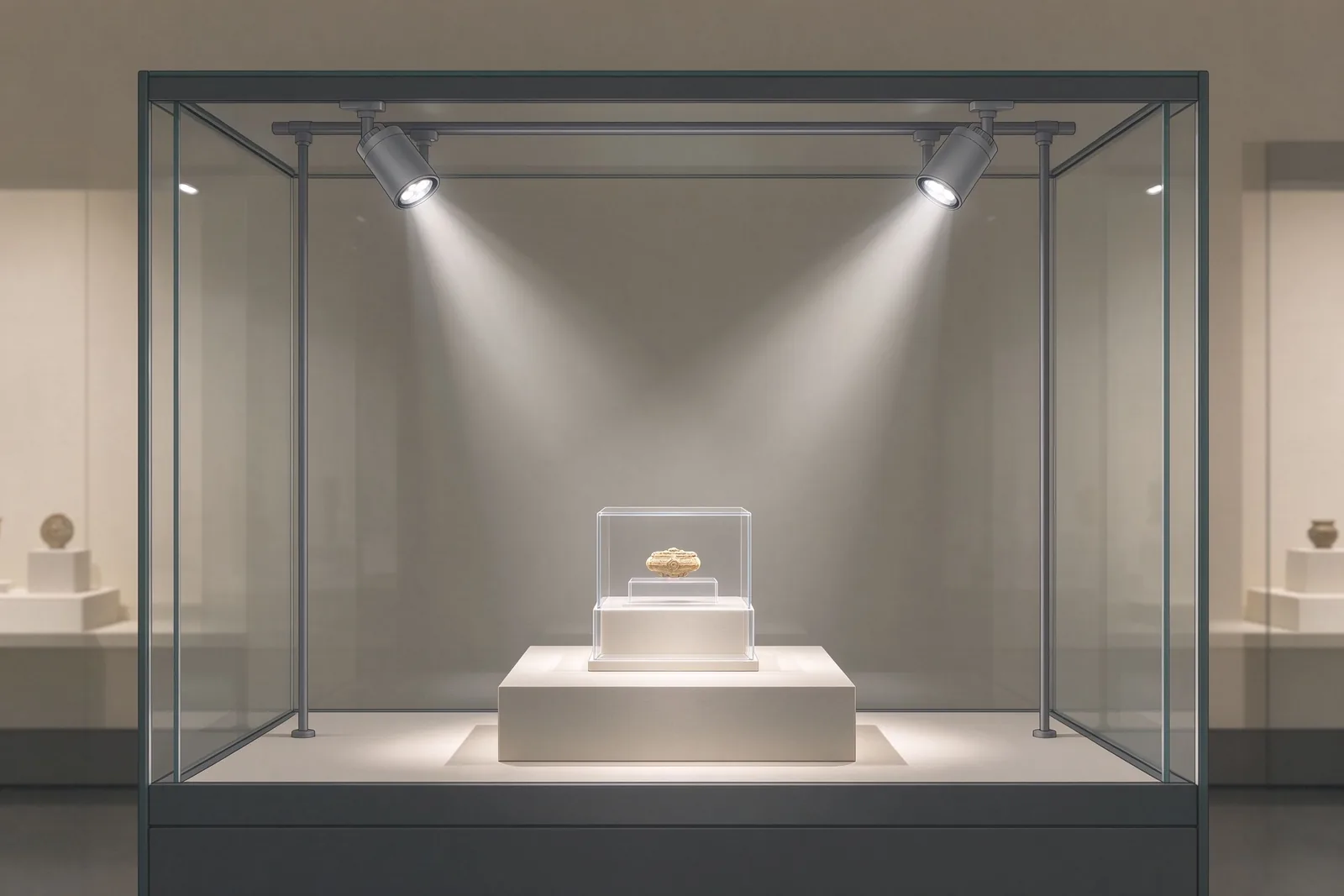
Museum display case lighting is a conservation and design task, not just a product selection. Miniature LED spotlights must deliver precise, low-glare illumination while managing heat, colour fidelity and light-sensitive material. This guide explains the key selection criteria — glare, heat, CRI, and installation — and what to send us for a museum lighting quotation.
What Makes Museum Display Case Lighting Different?
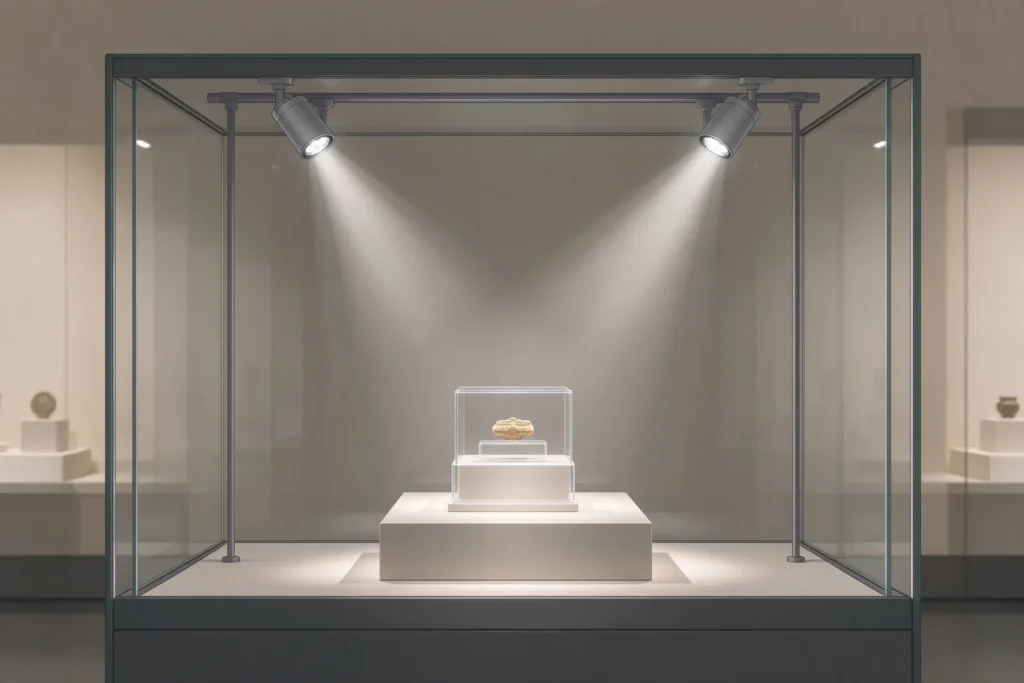
Unlike general retail lighting, museum cases protect fragile, light-sensitive objects. Requirements include low heat at the object, minimal UV/IR, controlled glare and reflection through glass, precise beam placement, easy maintenance, and stable, repeatable light output. A “bright lamp” is not the goal — controlled, conservation-conscious light is.
Choosing Miniature LED Spotlights for Museum Display Cases
Luminaire Size and Visual Integration
Small fixtures are easier to hide above or beside the object and reduce visual clutter inside the case.
Beam Angle and Precise Illumination
Narrow, adjustable beams let you light a single object or a small exhibit area without spilling light onto the glass or adjacent objects.
Adjustable Positioning
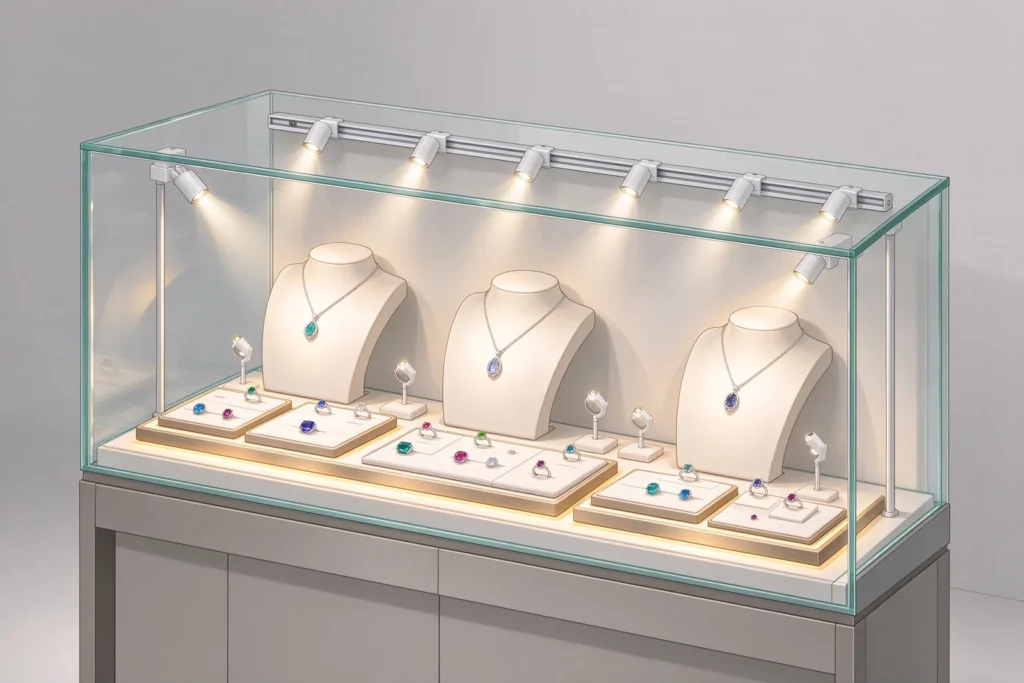
A slim rail with adjustable heads (e.g. magnetic track) lets conservators re-aim light as exhibits change — see our magnetic track range.
Managing Glare and Reflections in Glass Display Cases
Direct Glare
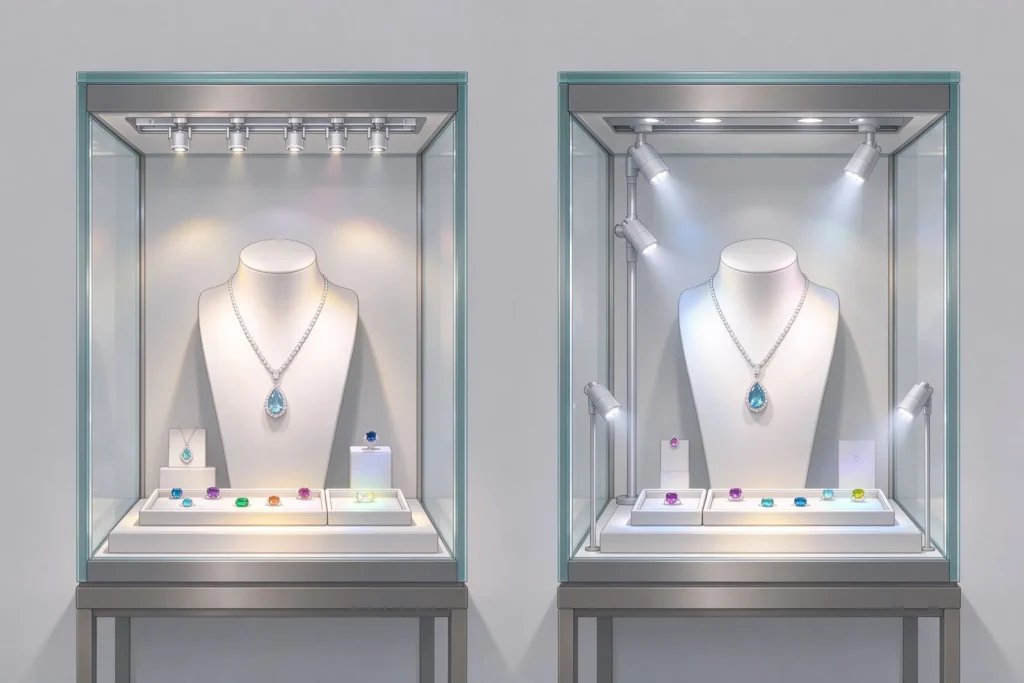
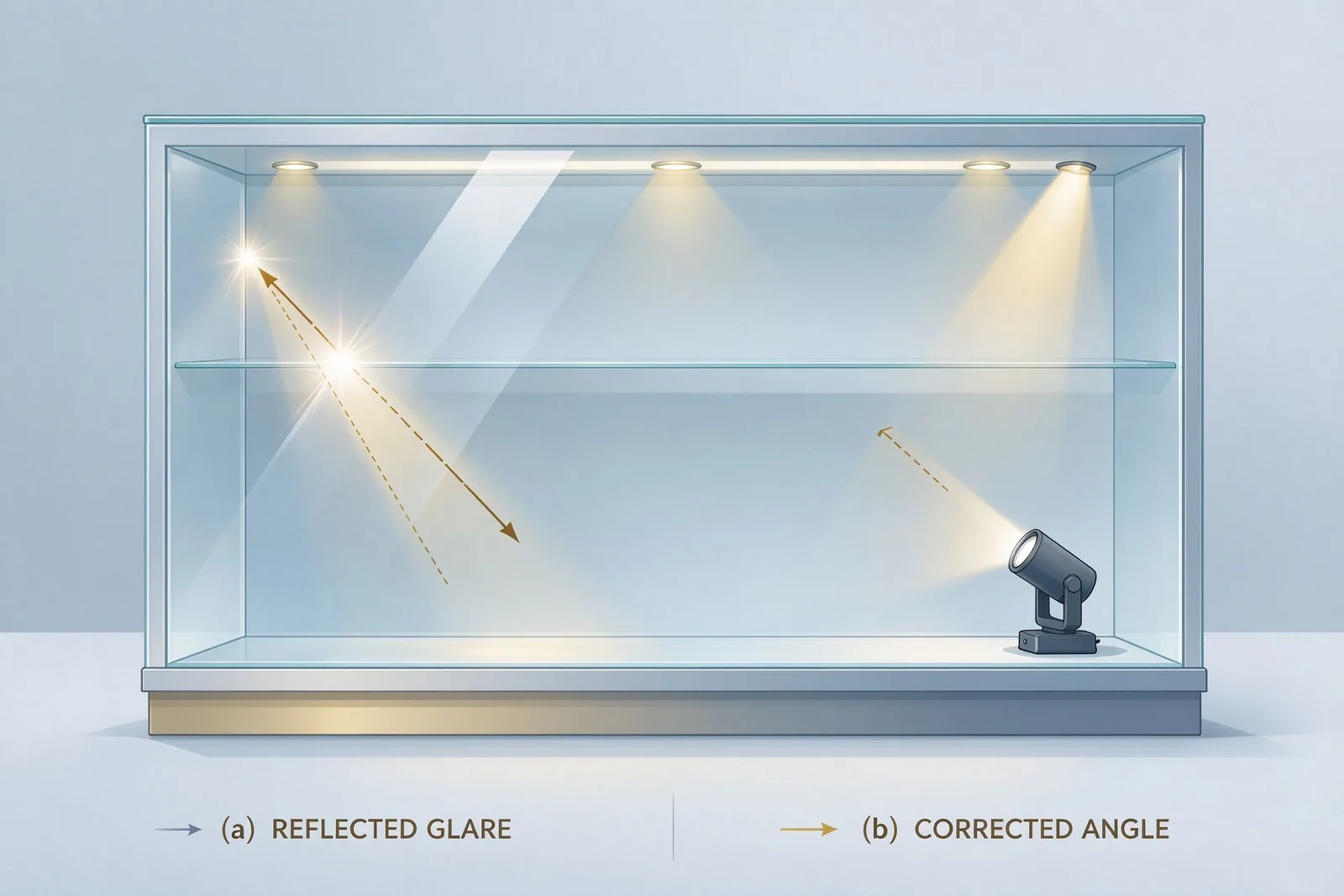
Light aimed toward the viewer’s eye creates discomfort glare. Use shielded or recessed fixtures and aim beams below eye level where possible.
Reflected Glare
Bright lamps reflecting in the glass hide the object. Positioning and beam angle are the main controls.
Spotlight Positioning and Shielding
Honeycomb baffles and careful aiming reduce both direct and reflected glare.
Heat Management and Exhibit Conservation
LEDs are far cooler than halogen, but they still produce heat. Drivers and fixtures must be placed to avoid localised warming of the object, and cumulative exposure matters. Conservation-safe lighting must be assessed per object — material, light sensitivity, illuminance, cumulative exposure, and UV/IR — and we do not claim any LED is automatically safe for all artifacts.
CRI, Color Temperature and Light Quality
High CRI (e.g. Ra≥90) improves colour rendering; CCT choice (e.g. 3000K–4000K) affects mood and material appearance. Where colour fidelity is critical, consider metrics beyond CRI, such as TM-30, and dimming to manage light dose. See our museum exhibit lighting solutions.
Magnetic Track vs Fixed Miniature Spotlights
Magnetic track offers adjustable, re-aimable heads and easier maintenance; fixed mini spotlights are simpler and more hidden. Choose based on how often exhibits change and access constraints.
LED Drivers, Wiring and Installation
Use a low-voltage driver (12V/24V), plan hidden wiring and driver location outside the case where possible, and ensure maintenance access. See our 12V/24V drivers.
Museum Display Case Lighting Selection Checklist
- Object type and light sensitivity (material, dose)
- Cabinet dimensions and glass configuration
- Beam angle and position to avoid glare/reflection
- High CRI (Ra≥90) and chosen CCT
- Low-voltage driver sizing and hidden wiring plan
- Maintenance and re-aiming needs

Frequently Asked Questions
What lighting is suitable for museum display cases?
Miniature, low-heat LED spotlights with high CRI, controlled beams and dimming — assessed against each object’s light sensitivity.
Are LED lights safe for museum artifacts?
LEDs are cooler and lower in UV/IR than halogen, but safety depends on object material, illuminance and cumulative exposure. Evaluate per object.
How can glare be reduced inside glass showcases?
Position and shield fixtures, use honeycomb baffles, and aim beams below eye level to reduce direct and reflected glare.
What CRI is recommended for museum displays?
Ra≥90 as a baseline; consider TM-30 and colour-fidelity metrics for critical exhibits.
Can magnetic track lighting be used in museum showcases?
Yes — adjustable heads suit changing exhibits and maintenance; verify with your cabinet.
How should LED drivers be installed?
Hidden, outside the case where possible, sized for total load, with maintenance access.
What information is required for a museum lighting quotation?
Cabinet drawings, exhibit type and sensitivity, lighting requirements and project quantity — send them via our RFQ form.
Request a Museum Showcase Lighting Configuration
Planning a museum display case or exhibition showcase? Share your cabinet drawings, exhibit type, lighting requirements and project quantity to discuss a suitable miniature LED lighting configuration.