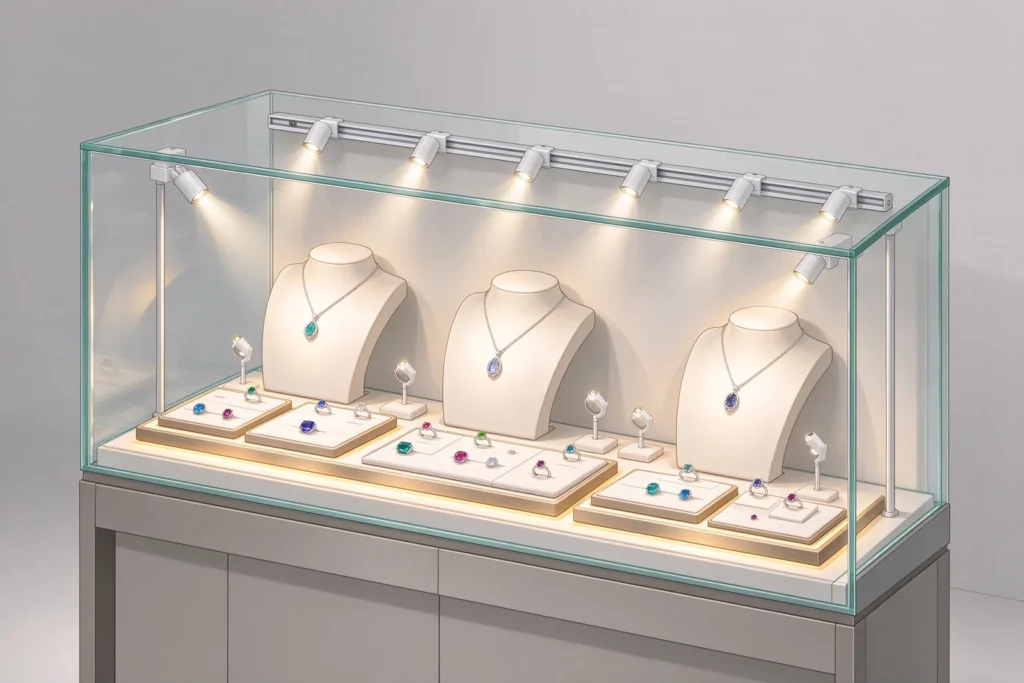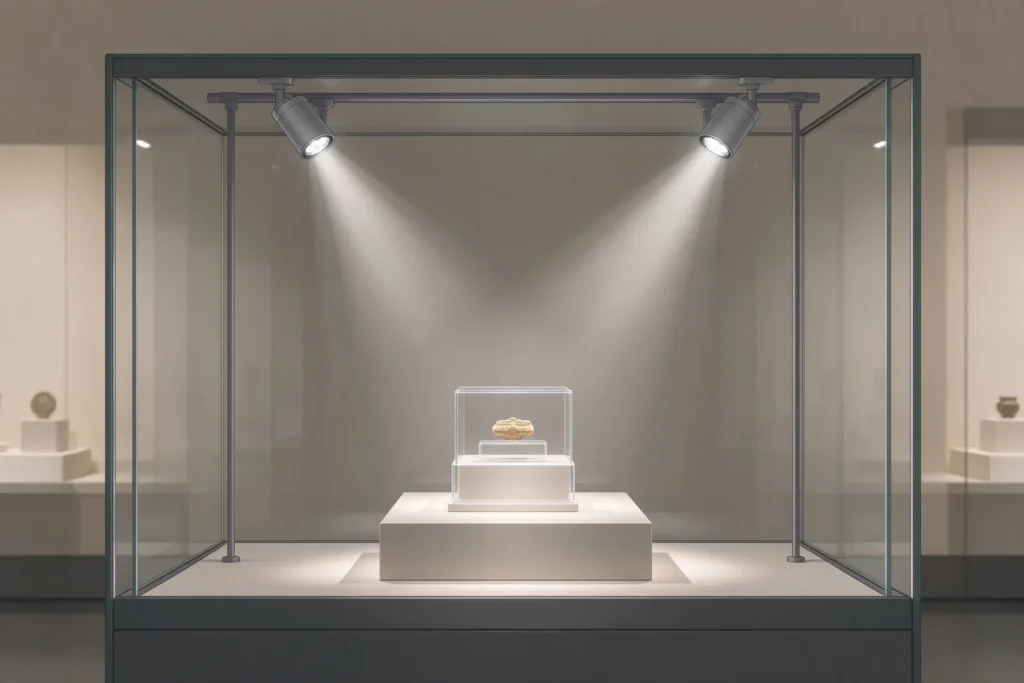
There is no single “correct” lumen number for a jewelry display case – the answer depends on the cabinet size, the glass, what is on display, and how dark you want the surrounding store to be. But there is a reliable method. This article walks through it with real numbers from 1W and 3W showcase heads, so you can plan a cabinet from a sketch instead of guesswork.
Last updated: November 2026
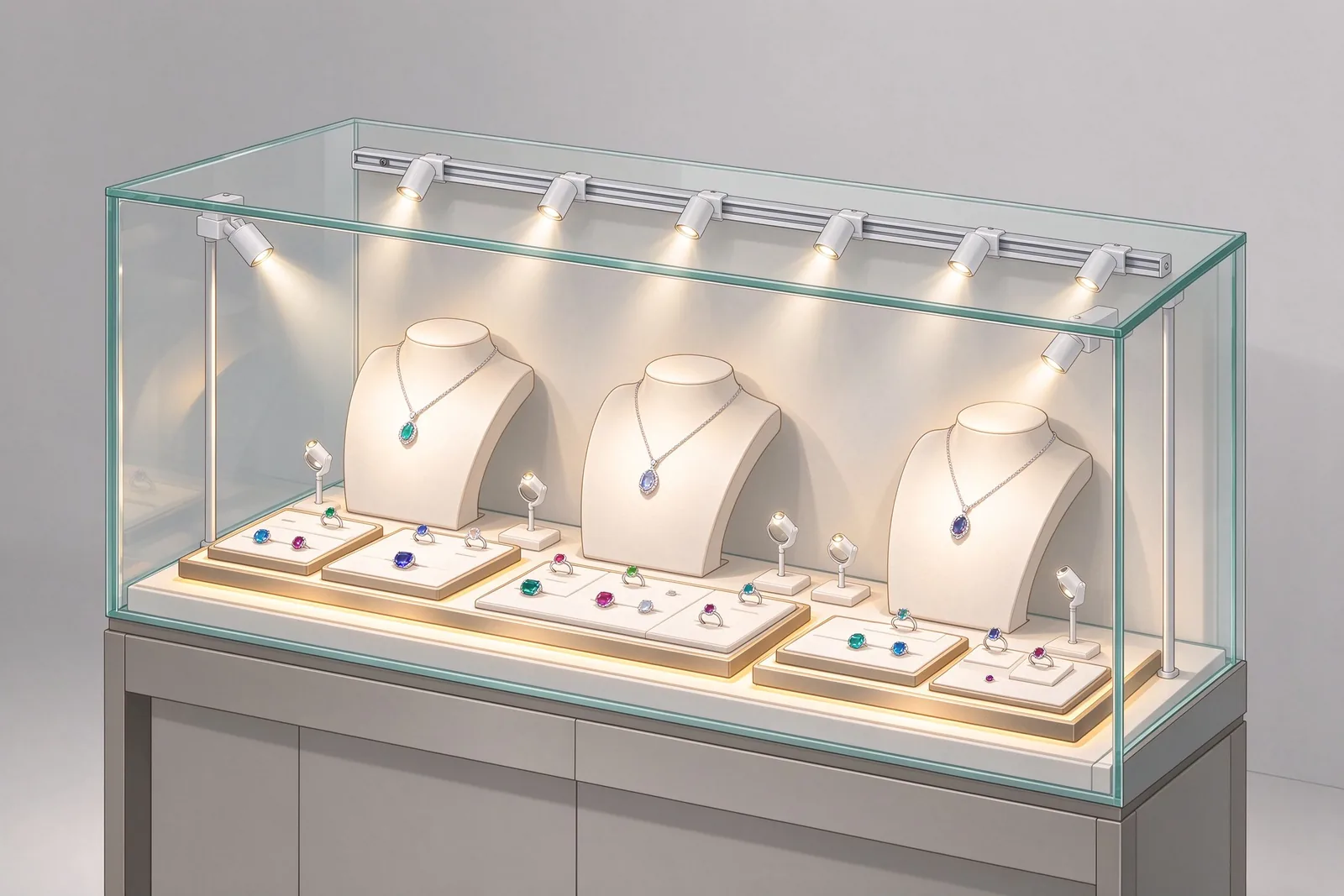
Step 1 – Start from the cabinet, not the lamp
Two numbers drive everything: the display area (track length × display depth) and the viewing distance. Jewelry is viewed from 30-60 cm away, which means light levels at the merchandise can run well above general store lighting without causing discomfort – the contrast is the point.
Step 2 – Pick head class by cabinet type
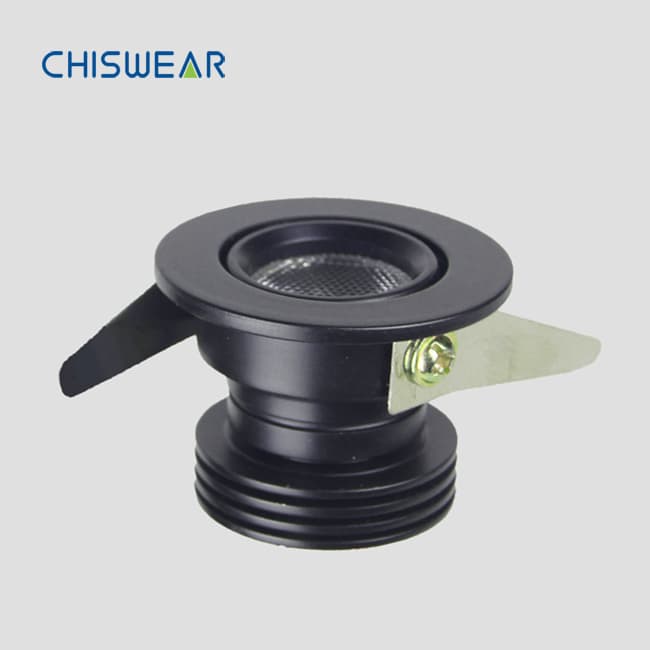
These are the starting points we use in project planning (outputs are from our standard 1W and 3W heads: a 1W head delivers 58 lm, a 3W head 165 lm):
| Cabinet type | Starting configuration | Notes |
|---|---|---|
| Single-watch / ring cabinet | 1-2 × 1W heads (58 lm each) | Narrow beam on one hero piece; CRI 90+ is non-negotiable for gems and metals |
| Standard jewelry counter (approx. 900-1200 mm) | 2-3 × 3W heads (165 lm each) | Mix beam angles: narrow to accent, wider to wash the shelf |
| Wide island / multi-shelf showcase | 3W heads along the track plus 1W fill heads | Layer: accents on merchandise, gentle fill on shelves |
| Museum-style case (light-sensitive items) | Lower output, wider diffusion, dimmed | Protect the object first – see our museum guides |

Step 3 – Adjust for the merchandise
- Diamonds, crystals, polished metal want narrow beams (around 12°) – sparkle comes from contrast and facet highlights, not from flood.
- Pearls, opals, textiles want wider, gentler light; narrow hot spots make them look cheap.
- Color temperature: 3000K flatters gold; 4000K keeps silver, platinum and watches crisp. Decide per display zone – mixing within one cabinet is normal and correct when the merchandise mix calls for it.
- CRI 90+ minimum – below that, stones and metals look gray no matter how many lumens you add. Our high-CRI explainer covers why.
Step 4 – A worked example
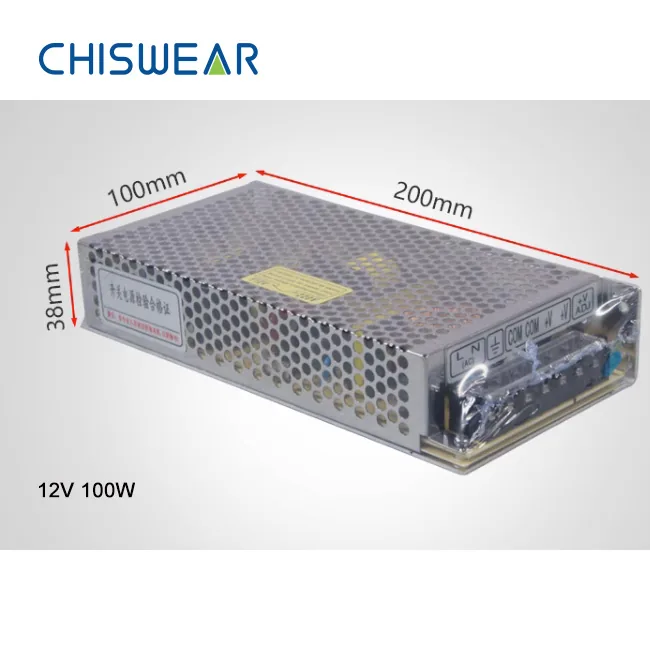
A 1000 mm jewelry counter, glass on top, mixed gold and silver pieces: 3 × 3W heads (165 lm each, ~500 lm total) on one low-voltage track – two narrow beams aimed at the hero pieces, one wider beam washing the shelf. Driver sized at 9W × 1.25 ≈ 12W minimum (see the driver selection guide). Dimmed 20-30% in the evening to shift the mood. Total installed cost of light is modest; what the customer sees is layered, high-CRI contrast.
Step 5 – Install capacity, dim down
Brightness preferences differ by store, by brand and by season. The professional approach is to install 20-30% more capacity than the daytime setting needs and run the system dimmed. A dimmed head also runs cooler and lasts longer – and a driver with headroom survives the day you add two more heads. Check the dimming-range test in our commissioning checklist before handover.
Frequently asked questions
Is brighter always better for a jewelry display case?
No. Over-lighting washes out sparkle on diamonds, heats the cabinet and creates glare through the glass. The goal is contrast between the merchandise and its background, not maximum brightness. Install capacity and dim down: it is easier to remove light than to add it after the cabinet is built.
What color temperature should jewelry display lighting be?
A common split is 3000K for gold and warm-toned pieces, and 4000K for silver, platinum, steel and watches, where a cooler light reads as crisp and accurate. Mixing within one cabinet is normal when the merchandise mix justifies it – decide per display zone rather than per store.
Does the display case glass reduce the light?
Every glass pane absorbs and reflects a small share of the light – roughly a tenth per pane in typical display glazing. With multiple panes or anti-reflective coatings involved, plan head count and aim based on measured brightness at the merchandise, not on the lamp rating alone.
Get a lighting plan for your cabinets
Send us the cabinet dimensions and what you display – we will return a head layout with beam angles, CCT per zone, driver sizing and spares as one quote. More guides in the showcase & display case lighting guide, including how to light different jewelry types in one cabinet.